


Quick heads-up before you spend a cent: almost nothing sold as an 'aurora projector' actually projects an aurora. Here's what these lights really do, who genuinely loves them, and how to pick one you won't want to send back.
Jump to: The truth · What you actually get · Who it suits · Labels decoded · How to pick · White stars and outdoor · FAQ
The uncomfortable truth about 'aurora' projectors
Type 'aurora projector' into any shopping site and you'll see the same promise: the northern lights in your bedroom. Sweeping ribbons of green and purple rolling across the walls, just like the photos from Iceland.
Here's the thing. That's not what the technology does. Inside almost every one of these units, including the big brand names you've seen all over social media, there are two parts: a laser that splits into hundreds of pinpoint stars, and an LED that projects one soft, slow-drifting nebula cloud. Stars plus a glowing cloud. That's the effect. No sweeping ribbons, no curtains of colour rolling across the whole room.
We sell one of these lights, so it would be easier for us to just ride the hype. But buyers who expect the full aurora end up disappointed, and buyers who want a dreamy star ceiling end up rapt. We'd rather help you work out which one you are before you spend a dollar.
What you actually get (and why people love it anyway)
Plug in The Aurora Laser Star Light, point it at the ceiling, and here's the honest result: a wide scatter of sharp green laser stars across the ceiling and upper walls, with one soft blue-violet nebula cloud drifting slowly through them. It looks like a slice of the Milky Way pressed onto your ceiling.
It's dreamy, not disco. The stars are pin-sharp because they're laser points, not fuzzy LED dots, and the nebula moves slowly enough that you stop noticing it's moving at all. Ten minutes under it and the whole room feels calmer.
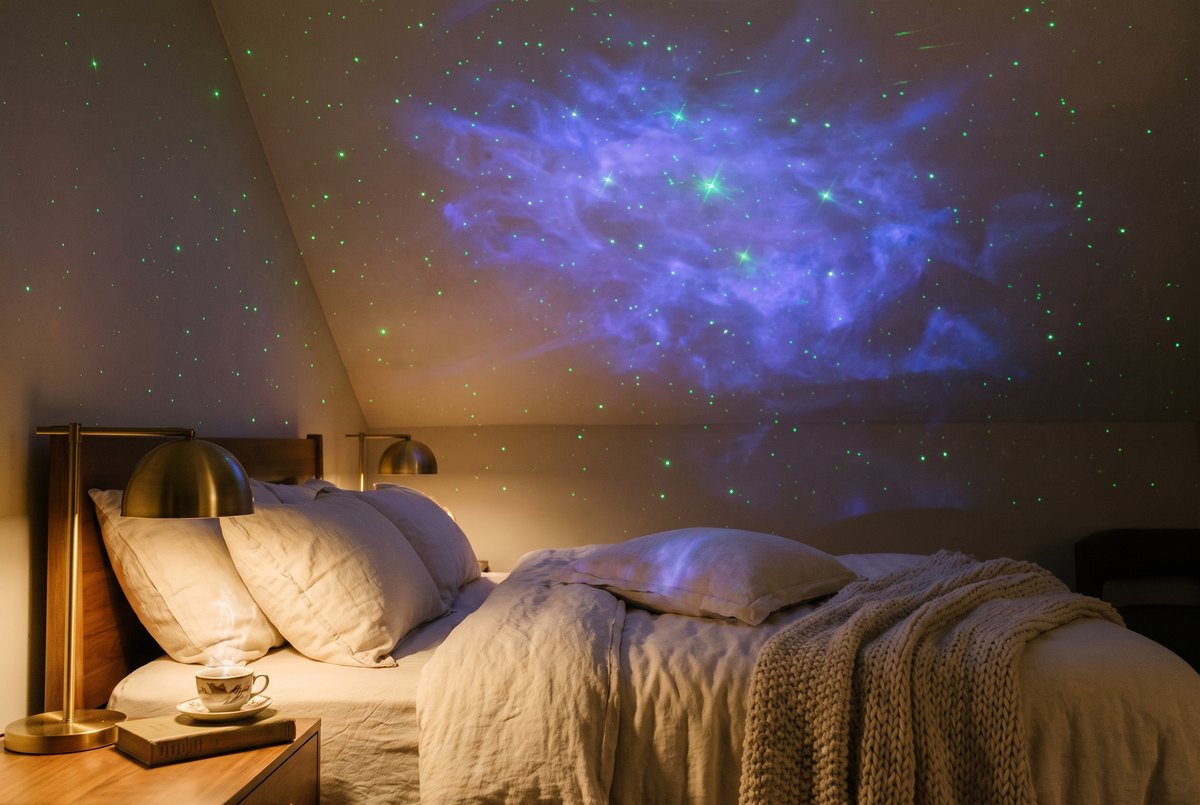
That photo is the real effect, no editing tricks. Green stars, one blue nebula. If that image makes you want one, you're exactly who this light was made for, and it's $245 at the moment, down from $319. If you were expecting your entire room wrapped in shifting curtains of colour, save your money, because no unit at any price does that.
Who it suits
- Kids' rooms and bedtime wind-down. The slow drift gives little eyes something calm to watch while they settle, and the timer switches it off after they're asleep.
- Sensory-friendly spaces. Gentle, predictable movement with no flashing, no sudden changes and no sound, which makes it a solid fit for calm-down corners and quiet rooms.
- Movie rooms. Stars overhead while the screen runs feels like a proper outdoor cinema, and the effect sits above your eyeline so it never washes out the picture.
- Teen bedrooms. The star ceiling they've seen a thousand times online, and this version actually looks like the videos.
- Night-feed nurseries. Enough soft light to see what you're doing at 3am without flicking on the big light and waking the whole house.
Aurora vs galaxy vs star projector: what the labels really mean
Shopping for one of these means wading through three labels that sound different and mostly mean the same thing. Quick decoder:
- Aurora projector. Marketing name for a star projector with a nebula cloud. The cloud is the 'aurora'.
- Galaxy projector. The same thing with a different sticker. Stars plus nebula.
- Star projector. Usually stars only, no cloud. The purist option.
The label tells you almost nothing, so read the spec instead: laser stars or LED stars, nebula or no nebula, timer or no timer. That's the whole game.
How to pick a good one
- Laser stars, not LED stars. Laser points are sharp like real stars. LED 'stars' are soft blurry blobs, and the difference is obvious the moment you see them side by side.
- Brightness. A good unit still reads clearly with a bedside lamp on. A weak one disappears the second any other light exists.
- Nebula size. The bigger and softer the cloud, the more of that aurora feel you get. Tiny nebula, tiny wow.
- A timer. Non-negotiable for kids' rooms. You want it switching itself off, not you creeping in at 10pm to do it.
- Noise. Cheap units hum and click as the motor turns. At bedtime, in a silent room, you will hear it.
- No app needed is a feature. Plug in, point at the ceiling, done. No wifi pairing, no account sign-up, no firmware update at 7pm when the kids are already in bed.
Want pure white stars instead? Or the backyard version?
Two honest alternatives, depending on the look you're actually chasing.
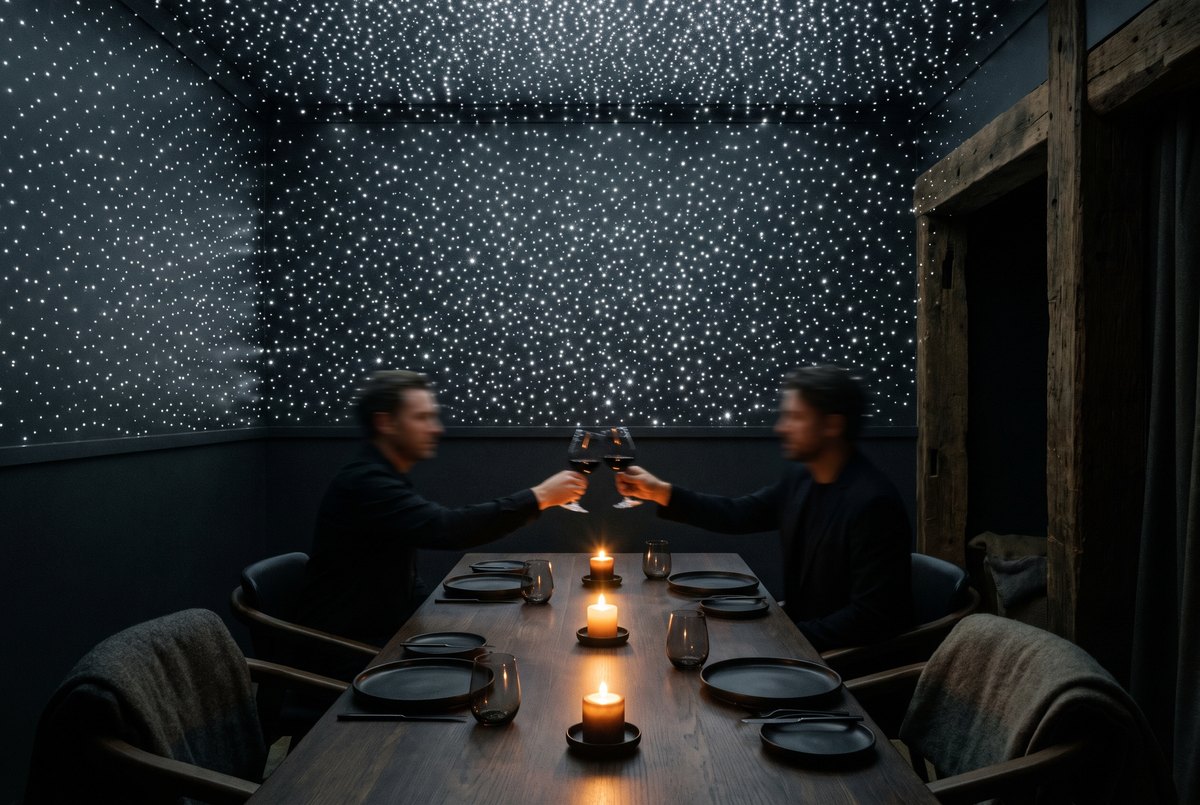
If coloured light isn't your thing, the White Star Crystal Laser ($297, down from $449) projects pure white pinpoint stars and nothing else. No nebula, no green, just crisp white points, indoors or out. It's the premium diamond-ceiling look, and the one to pick for dinner parties and grown-up spaces.
If you're picturing stars across the whole garden rather than a ceiling, that's a different tool entirely. The HighBright™ Garden Laser ($275, down from $349) is the outdoor one: weatherproof, and built to throw green and blue stars across an entire backyard, trees, fence and all.
Aurora projector FAQ
Is it safe to leave on in a kids' room at night?
Yes. The projector runs cool to the touch, and the built-in timer means it turns itself off once they're asleep. Point it at the ceiling rather than at faces and you're set.
How much ceiling height do I need?
A standard 2.4 metre ceiling is plenty. The further the projector sits from the surface, the wider the starfield spreads, so taller rooms just get a bigger sky.
Does it show up in daylight?
No, and any brand claiming otherwise is having a lend of you. It's a night effect. You'll get a preview at dusk with the curtains drawn, and the full show once the room is properly dark.
How much power does it use?
Barely any. These run on a handful of watts, less than a phone charger, so the running cost is small change.
Can it face a wall instead of the ceiling?
Yep. Any flat surface works. Angle it across a feature wall behind the TV and the stars stretch a little wider, which honestly looks great.
The honest wrap-up
If you're after the real aurora, you'll need a plane ticket and a fair bit of luck. If you're after a calm, starlit ceiling that makes bedtime easier and movie nights better, an aurora projector does exactly that, and a good one does it beautifully.
Ours is in more than 10,000 Australian homes and holds 4.9 stars across 287 Australian reviews. We're Australian-owned with stock held in QLD, and every unit is covered by a 12-month warranty and a 30-day money-back guarantee. So if the stars land on your ceiling and they're not what you pictured, send it back. That's the deal.
The Aurora Laser Star Light
$245 (was $319)
A galaxy of soft stars and nebula glow, one power point.
4.9 stars · 287 Australian reviews · 12-month warranty · 30-day money back
See the Aurora →
